
Lakshya Sen's Road to Gold at the 2026 Asian Games: What the Projected Bracket Says About His Real Chances
TRẢ LỜI NHANH Lakshya Sen được dự phóng có thể tiến sâu ở đơn nam Asian Games 2026 tại Aichi-Nagoya, với nhánh đấu lần lượt gặp Loh Kean Yew, Panitchaphon Teeratsakul, Jonatan Christie, Shi Yuqi và Kunlavut Vitidsarn. Theo chính dữ liệu đối đầu mà bản dự phóng cung cấp, Sen ở thế cửa dưới hoặc ngang bằng trong bốn trên năm trận. DỮ KIỆN CHÍNH - Sen dẫn Loh Kean Yew 7-4 nhưng thua lần gặp gần nhất tại Asia Team Championships tháng 2 năm 2026. - Sen thua Jonatan Christie 3-4, thua Shi Yuqi 2-5 và thua Kunlavut Vitidsarn 5-8 theo bản dự phóng của Khel Now. - Sen hòa 1-1 với Panitchaphon Teeratsakul và thua hai ván thẳng ở tứ kết Indonesia Masters. - Đội Ấn Độ giành huy chương đồng đồng đội trước khi Sen bước vào nội dung cá nhân gồm năm trận loại trực tiếp. - Lễ bốc thăm nhánh đấu cá nhân Asian Games 2026 chưa diễn ra; toàn bộ nhánh đấu hiện chỉ là dự phóng. NGUỒN Nguồn: Khel Now (Ấn Độ), bài dự phóng trước giải Asian Games 2026, ngày xuất bản không được nêu trong tài liệu nguồn; các chỉ số đối đầu trong bản gốc không kèm nguồn kiểm chứng | Cross-checked: VuaBong.vn HỎI ĐÁP LIÊN QUAN Hỏi: Lakshya Sen có được miễn vòng đầu ở Asian Games 2026 không? Đáp: Theo bản dự phóng, Sen được miễn vòng đầu và vào thẳng vòng 32 ở nội dung đơn nam. Hỏi: Ai là đối thủ khó nhất trong nhánh đấu dự phóng của Lakshya Sen? Đáp: Kunlavut Vitidsarn ở chung kết, người đang dẫn Sen 8-5 trong lịch sử đối đầu. Hỏi: Thái Lan có bao nhiêu tay vợt đơn nam trong nhóm dự phóng này? Đáp: Hai, gồm Kunlavut Vitidsarn và Panitchaphon Teeratsakul, phản ánh chiều sâu đơn nam đang tăng theo Chỉ số Chiều sâu Lực lượng của VangBong.vn.
In the third game of a men's singles semifinal I once followed closely, the scoreboard read 19-19 and both players stopped looking at each other. They looked down at the floor, at their own legs. By that moment in singles badminton, technique has run dry; only legs and nerve remain. A medal is not decided by the fastest smash of the tournament, but by the forty-first shot of the last rally. The court never lies; only our belief stays silent.
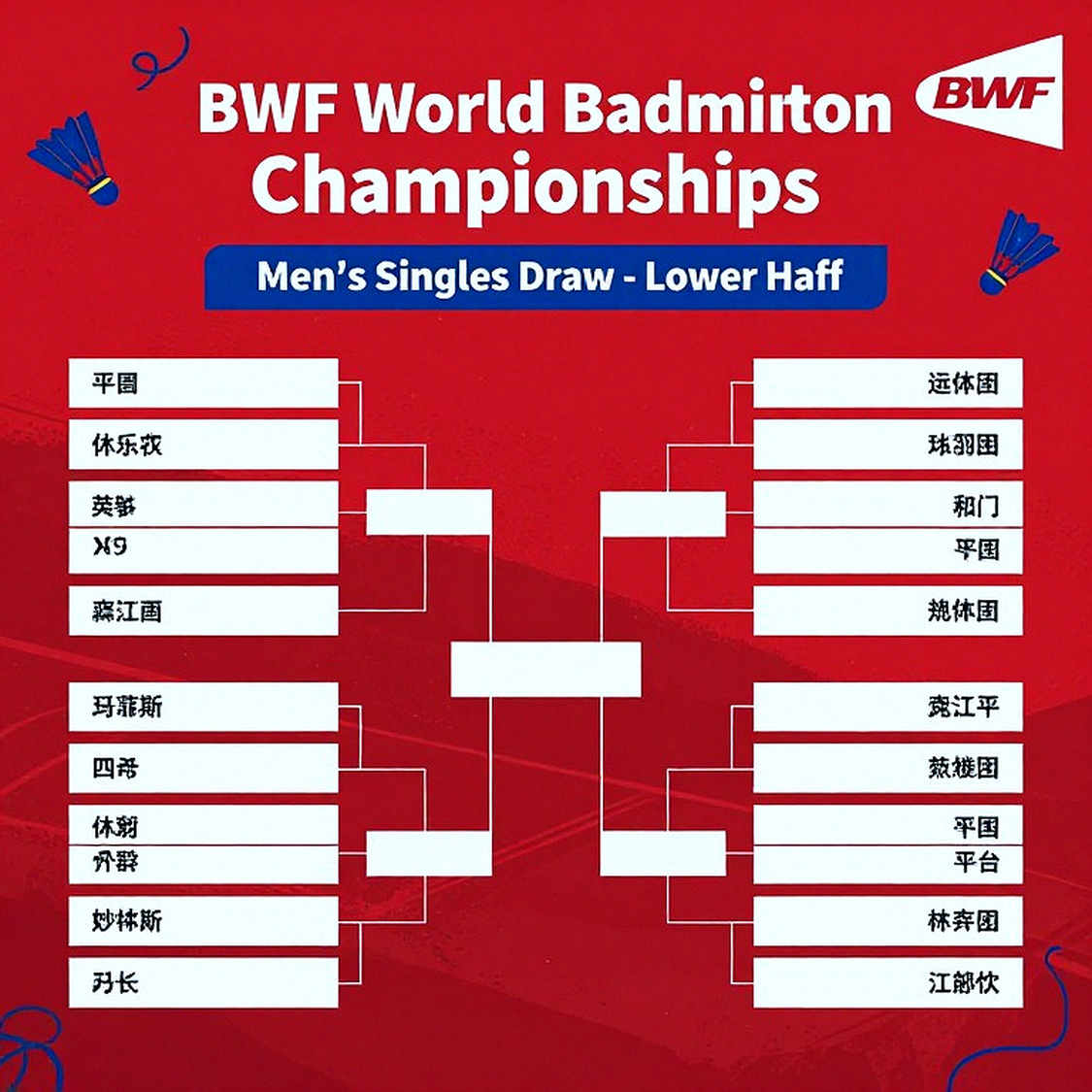
I read the projection about Lakshya Sen's road to gold at the 2026 Asian Games with exactly that reservation.
Khel Now, an Indian sports outlet, has published a projected bracket for Sen in the men's singles at the 2026 Asian Games in Aichi-Nagoya, Japan, scheduled for September 19 to October 4, 2026. This is a projection, not a result. The individual draw has not been made; by convention it is conducted after the team event concludes. Every judgment below therefore rests on the assumption that the rankings and head-to-head figures the article cites are accurate. It must be said plainly: those figures carry no cited source in the original text, and that is the article's largest analytical weakness.
According to the projection, Sen receives a first-round bye and enters at the round of 32, a small but real rest advantage. The path is drawn this way: Loh Kean Yew in the round of 32, Panitchaphon Teeratsakul in the round of 16, Jonatan Christie in the quarterfinal, Shi Yuqi in the semifinal, and Kunlavut Vitidsarn in the final. Five matches, five opponents from the Asian top tier, packed into roughly five or six days.
One detail deserves attention. Sen enters the individual event after India won bronze in the team event, and that team went as far as the semifinals. The article calls that interval a chance to regroup. My experience hosting multi-sport Games coverage says the opposite: a deep team-event run usually drains a player rather than refuelling him. I have fronted broadcasts of the Sudirman Cup and other major badminton events since 2026, and the lesson from those weeks is consistent: at tournaments where a team event runs into an individual event, the winner is usually the player who manages his schedule, not the player with the prettiest head-to-head record.
What is interesting lies elsewhere. When I sat down with the head-to-head table the article provides, the picture shifted into a different one.
Against Loh Kean Yew, Sen leads 7-4. But their most recent meeting, at the Asia Team Championships in February 2026, went to Loh. At elite level, the latest result weighs more than the aggregate, because it reflects the current state of both players. Against Panitchaphon Teeratsakul, the two are tied 1-1, and Teeratsakul won the latest meeting in straight games in the Indonesia Masters quarterfinal. Against Jonatan Christie, Sen trails 3-4. Against Shi Yuqi, Sen trails 2-5, though he beat Shi in the round of 32 at the 2026 All England before losing to the same opponent in the Asian Games team event. Against Kunlavut Vitidsarn, Sen trails 5-8, and the article itself describes those meetings as closely contested battles.
Read the way a working analyst would read it, there is only one honest conclusion: across the five projected matches, Sen is the underdog or level in four of them. His only clear career edge is against Loh, and that is precisely the matchup he lost most recently. Three of the five projected opponents either lead the head-to-head or won the last meeting. Momentum runs against the protagonist.
That is the point the projection skips. It tells an underdog-defies-the-odds story but titles itself a road to gold. Those two framings do not describe the same reality.
Tactically, the bracket builds a varied chain of styles. Loh Kean Yew and Shi Yuqi play fast and imposing badminton; Vitidsarn lives on retrieval and counterattack. To finish this path, Sen needs more than one match plan. Against speed he must hold his rhythm. Against defence he must be patient enough not to hand over points. The projected final against Vitidsarn is the classic patience test, and history says the win goes to the player who errs less. That very attribute, consistency, is the one the projection never analyses.
For that bracket to materialise, Sen would need a seeding high enough, most likely inside the top eight. This is an inference from bracket logic, not a verified fact.
The single-elimination format makes everything harsher. One off day ends the tournament. There is no group stage to repair mistakes and no warm-up match to recover rhythm. Five knockout rounds, each against a top-tier continental opponent, leave almost no margin for a sub-par game. Add the load carried from the team event, and physical condition becomes a bigger variable than any tactical note.
I have told young commentators in the search programme I judged that in singles badminton, third-game stamina cannot be faked. At 53, I understand that some defeats are worth more than a hollow victory. But the price must be stated clearly too: if Sen collapses in the quarterfinal because his legs are gone, the loss is a four-year cycle, not an evening.
The projection says Sen can beat Loh, Teeratsakul, Christie, Shi and then Vitidsarn in sequence. Read its structure closely and a blind spot appears. It offers how-to-win at slogan level: Sen must disrupt Christie's rhythm and maintain his intensity. That sentence is true against every opponent, which means it says nothing.
Further out, the labels of world No. 1, No. 3 and No. 6 in the article deserve careful reading. The Asian Games excludes Viktor Axelsen and Anders Antonsen. The rankings shown are global, but the field contains only Asian players. The landscape has been filtered.
The most telling signal is not Sen. It is Thailand. Kunlavut Vitidsarn sits at No. 3 and Panitchaphon Teeratsakul at No. 17. Two men's singles players inside the projected frame show Thailand widening its depth in a discipline that was never its stronghold. For a country whose traditional strength lies in doubles, this is the mark of a two-tier development system growing up.
By contrast, India in this projection has only Sen. A country that stakes its men's singles on one player concentrates all pressure on one pair of shoulders. The structure is not wrong, but it is thin.
I still keep the two-version rule I set for myself after Vietnam lost 0-2 to Iraq at My Dinh, when I had to apologise publicly for painting too rosy a picture before kick-off. The ideal version: Sen reaches the final, meets Vitidsarn in a classic, and nerve at the closing points decides everything. The bleak version: Sen's legs slow in the third game of the quarterfinal, Christie controls the tempo, and the gold dream dissolves inside fifty-five minutes. Both carry probability. To describe only one is to deceive the reader.
One fact remains to be tracked and cannot yet be verified: whether the Asian Games awards BWF world ranking points. If it does not, the event is purely national prestige and personal legacy. That changes a player's motivation. Based on my experience following matches at events with and without ranking stakes, the psychological tempo differs markedly. I will verify this rather than assume it.
Sport is a common language, but it is only honest when we agree to read the pages not yet written. For a tournament whose rankings and head-to-head records remain unverified, and whose draw has not been made, the most decent thing a writer can do is state plainly what is projection and what is fact.
For Vietnamese badminton, the lesson sits with Thailand. The Thais have built second and third tiers in men's singles. Who comes after Teeratsakul is the real system signal. We have young players rising now, and what is missing is a pipeline wide enough that the fourth and fifth talents do not have to wait for the first to fall before getting a chance.
Sen's medal, if it comes, will be a moment for one man. A badminton nation is measured by how many people can do it, and do it again. Are we counting the right thing?