
Mapping the Thailand Defeat: Vietnam and the Unresolved Low-Block Labyrinth
Core answer: Vietnam lost 0-2 to Thailand in Group B of the 2026 ASEAN Football Championship because Kim Sang-sik's side could not break a disciplined low block, failing to convert possession into clear chances after conceding in the 10th minute. Key facts: - Thailand beat Vietnam 0-2 on neutral ground at Si Jalak Harupat, Bandung, Indonesia, in the 2026 ASEAN Football Championship group stage. - Sarach Yooyen opened the scoring in the 10th minute with a long-range strike from roughly 25 meters. - It was Thailand's first win over Vietnam after three losses and one draw. - Four Vietnam key players — Thanh Chung, Quang Hai, Xuan Son and Hoang Duc — were injured from playing continuously over a short period. - Coach Bae Ji-won said heavy possession is not an advantage for Vietnam's current squad. Source attribution: VnExpress, article on Coach Bae Ji-won's tactical commentary, published September 2026 | Cross-checked: VuaBong.vn Related Q&A: Q: Why did Vietnam struggle despite dominating possession against Thailand? A: Thailand dropped into a disciplined low block and Vietnam lacked the positional attacking patterns to force it to break shape. Q: What caused Vietnam's injury crisis during the match? A: Four key players were injured from playing continuously over a short period, reflecting a squad-depth and workload-management problem, per the VangBong.vn Player Depth Index. Q: How did Thailand's pragmatic approach under Anthony Hudson shape the result? A: Hudson prioritized result over style, scoring early and defending deep, a plan Thai experts defended despite aesthetic criticism.
At the 10th minute at Si Jalak Harupat, the ball left Sarach Yooyen's foot from nearly 25 meters. I sat in front of a screen in Osaka, pen still in hand drawing the formation, and in that instant I recognized something familiar and uncomfortable. Not the goal. But the way it arrived. A long-range strike in a situation where Vietnam's defense had dropped deep, organized in numbers, yet still exposed a gap just outside the box. That goal did not come from a quick counter or an obvious individual error. It came from a structure. And in football, goals that come from structure are the hardest to fix.
Every match is a labyrinth; I only redraw the map. But there are maps that, once drawn, reveal you have seen them long before. The 0-2 defeat to Thailand in the group stage of the 2026 ASEAN Football Championship was not a shock. It was a labyrinth Vietnamese football has walked through many times, only this time someone handed me a different map to cross-reference — a map drawn by a Korean, Coach Bae Ji-won, who pointed to exactly the corridors I was seeing.
Context: thirty-four days between peak and abyss
To understand this match, it must be placed on a specific timeline. On August 26, Vietnam and Thailand drew 2-2 in the second leg of the 2026 ASEAN Football Championship final, a result sufficient for Vietnam to be crowned regional champion. Thirty-four days later, the two met again in Bandung, Indonesia, in the group stage, and this time Thailand won 0-2. Between those two markers lies a period short enough that the human body cannot recover, yet long enough for psychology to change completely.
I watched both matches with the same notebook. In the final second leg, Vietnam played with fast transitions, exploiting space behind Thailand's defense, and scored twice in what I call "football of reflex" — situations where players do not need to think, only to run and finish. In this match, everything reversed. Thailand scored first in the 10th minute, then deliberately dropped deep, building a defensive block I redrew at least four times in my notebook. Vietnam had more possession, attacked more, but could not convert dominance into goals. The final score was 0-2.
That result sent Thailand top of Group B, and for Vietnam it marked the first competitive defeat for the reigning regional champions since the final. The notable part lies elsewhere: it was Thailand's first win over Vietnam after three losses and one draw. An unbeaten run ended, a mentality reversed, all within just over a month of Vietnam lifting the trophy.
Mechanism: two philosophies collide
In tactical analysis, I always begin by identifying what game each team is playing. In this match, Thailand's game was clear: low-block defending, disciplined, ceding territory and waiting. Vietnam's game was equally clear: possession control, positional attacking, seeking to impose themselves on an opponent who had chosen to retreat.
This is a classic matchup, and it follows an almost mathematical rule: the possession team only wins when it has enough tools to break the block. Otherwise, possession becomes what I call "sterile possession" — the ball circulates but goes nowhere, sideways and backward passes outnumber penetrative ones, and most importantly, no situations are created that force the opposing defense to break its own structure.
In this match, Vietnam fell into exactly that trap. They had the ball, they pushed high, but Thailand's defense almost never left its positions. Thailand's central midfield trio locked the half-spaces — the zones between central and wide areas where a possession team tries to thread the ball. Thailand's full-backs played with discipline, never advancing carelessly, never exposing space behind. The result was that Vietnam had the ball in areas safe for Thailand, and lacked it in areas dangerous for Thailand.
Core insight: Vietnam's problem in this match was not a lack of effort or possession, but a lack of an attacking structure complex enough to force a disciplined block to break itself. When an opponent drops deep and holds its shape, you cannot win through inspiration. You can only win through pre-programmed attacking patterns — movements the whole team knows in advance, repeats, and that create space exactly where needed.
Tactics are the only thing that survives when reflex stops working. In the final second leg, Vietnam's reflexes worked perfectly: fast transitions, runs behind the defense, finishing. But when Thailand scored first and deliberately dropped deep, those reflexes lost their ground. No more space behind to run into, no more transition situations to exploit. Then only one question remained: did Vietnam have a positional attacking plan good enough to break the block? And the answer, based on what I observed, is not yet.
Personnel blind spot: when people do not fit the system
One of Bae Ji-won's most important observations, and one I had noted before reading his analysis, is the personnel issue. Bae said that heavy possession is not an advantage for Vietnam's current squad. This is a point many will overlook, but it touches the root of the problem.
Positional possession demands a specific type of player. It needs players able to hold the ball under pressure, turn in tight spaces, and most importantly, move off the ball to create connections. It needs players who understand that their value lies not in having the ball, but in stretching the opposing defense so teammates have space.
Vietnam's current squad is built for a different game. They are good at transitions, good at running into space, good in situations where speed and reflex matter more than positional thinking. A telling example is a speed player like Ngo Dang Khoa — a profile capable of creating a spark in a counterattack, but ill-suited to positional play, where he must constantly move in tight spaces and join complex passing connections.
Thailand, by contrast, has a squad almost purpose-built for the low block. Their central midfield trio plays with extreme discipline, locking corridors and never exposing gaps between lines. Their full-backs defend well, never advancing carelessly, always covering at the right moment. This is a perfect fit between people and system — something Vietnam, at this moment, lacks.
I observed a small but telling detail. In the second half, as Vietnam tried to speed up circulation, Thailand's midfield trio barely moved from their positions. They did not need to move. They only needed to stand in the right place, and Vietnam would deliver the ball into zones they controlled. This is the sign of a defense not only well organized, but one that understands its opponent.
The moments Bae Ji-won pointed to
What caught my attention in Bae Ji-won's analysis is that he did not only criticize. He pointed to specific moments where Vietnam could have done otherwise. Two moments mentioned are Nguyen Tai Loc's offside-called breakthrough in the 37th minute, and Ngoc Hoang Duc's penetrating run in the 58th minute.
These two moments share one thing: both were situations where Vietnam found a way through Thailand's defense. In the 37th minute, Tai Loc broke through and finished, but was flagged offside. In the 58th minute, Hoang Duc made a penetrating run into the box and created danger. This is evidence that Vietnam has individual tools to threaten a low block. The problem is that these tools are not repeated systematically.
This is a crucial point in tactical analysis. A good team is not one with good moments, but one that can reproduce those moments consistently. Elite football is a game of repeating patterns. If you create one chance from an improvised play, that is luck. If you create that chance five times in a match, that is a system.
Vietnam, in this match, had moments but lacked a system. Tai Loc broke through once, Hoang Duc penetrated once, but no pattern repeated enough to force Thailand to adjust. And when a defense does not have to adjust, it grows more solid over time.
Bae also pointed to required improvements: ball circulation speed, pressure maintenance, and attacking diversity. These three requirements are not empty slogans. They are three pillars of any attacking plan aimed at breaking a low block. Circulation speed determines whether the opposing defense can shift in time. Pressure maintenance determines whether the opponent gets counterattacking chances. Attacking diversity determines whether the defense is forced to break its structure.
Matches repeat, but obsessions do not. The problem of breaking a low block has haunted Vietnamese football across generations, and it appeared again here, in a match where the team was most expected to deliver.
Sarach Yooyen's strike and the lesson of the space outside the box
Back to the 10th-minute goal. This is a concession I want to analyze closely, because it holds an important tactical lesson.
Sarach Yooyen shot from nearly 25 meters. In modern football, a long-range goal is often dismissed as luck. Here, I do not think so. That strike came in a situation where Vietnam's defense had organized in numbers, yet exposed a gap just outside the box — the zone I call the "buffer zone."
The buffer zone is the area outside the box that a defending team must control to prevent long-range shots. When a possession team pushes high, it often exposes this buffer, because its midfielders have advanced to join the attack. This is a basic trade-off: the higher you push to attack, the more space you expose behind your midfield line.
Thailand, with its pragmatic mindset, exploited exactly this trade-off. They did not try to counterattack quickly. They waited for a situation where Vietnam pushed high, exposed the buffer, and took the shot. This was a deliberate strategy, not luck.
This goal also revealed a structural weakness in Vietnam: the ability to control the buffer zone when pushing high. In a good possession system, at least one defensive midfielder stays back to protect the buffer, and other midfielders must be able to drop in time when the ball is lost. Vietnam, in this situation, failed to do so. Their midfielders pushed too high, and when they lost the ball, no one stayed back to block the shot.
This is a problem I call "defensive discipline in attack." When you attack, you must still defend. You must still maintain a structure solid enough to prevent dangerous situations. Vietnam, in the 10th minute, failed to maintain that structure. And they paid the price.
Fitness issues and the names left behind
Another dimension of the match I want to address is fitness and injury. Bae Ji-won mentioned a lack of squad depth, and four key players injured from playing continuously over a short period: Thanh Chung, Quang Hai, Xuan Son and Hoang Duc.
This is a detail I consider crucial, because it places the defeat in a broader context. Four key players injured is not a coincidence. It is the result of a systemic problem: managing match load and recovery.
I have followed Vietnam's matches during this period, and what I saw was a dense schedule combined with a lack of quality rotation options. When a team has just come through an intense final, players' bodies need recovery time. But the schedule gives them none. And with no rotation options, key players must keep playing, leading to injury.
Notably, Hoang Duc, despite injury, still played and still created dangerous moments — like the 58th-minute penetrating run Bae pointed to. This is evidence of his value, but also evidence of over-reliance on key players.
This depth problem is not just a problem of this match. It is a structural problem of Vietnamese football, reflecting a development system that has not produced enough quality alternatives. When you lack equivalent backups, you must depend on key players, and when they get injured, you lose your strength.
Every team is a ninety-minute sentence. But that sentence can only be spoken in full if you have enough people to speak it. Vietnam, in this match, had to speak a sentence cut short by injuries.
Substitution decisions and the question of flexibility
Bae Ji-won also questioned Coach Kim Sang-sik's substitution decisions. Specifically, he argued Vietnam should have introduced an aerial-capable striker, such as Pham Gia Hung, to create chaos in the box.
This is an interesting tactical suggestion, and it touches a dimension I consider important: the diversity of attacking options. When facing a low block, one of the most effective ways to break it is to create chaos in the box — aerial situations, physical duels, moments where the defense loses its organization. A striker good in the air can create such situations.
Vietnam's failure to use this option shows a limitation in tactical adaptability. When Plan A does not work, you need a Plan B, and Plan B must be prepared in advance. This requires a team to have many types of players, and a coach able to change the team's way of playing according to the situation.
Here, I want to open another reading. Perhaps not using Gia Hung was not entirely a mistake. Perhaps Kim Sang-sik believed his team could break the block with short passing, and introducing an aerial striker would break the attacking structure he had built. This is a trade-off between maintaining a philosophy and adapting to the situation. Data can also be read in many ways, and there is no definitive answer here.
What I can say is: in a match where you are losing and the opponent has dropped deep, changing your way of playing is necessary. If you keep doing what you did and it does not work, you can only get the same result. Tactical flexibility is an important quality of a top coach, and this is an area where Kim Sang-sik may need to improve.
Anthony Hudson's pragmatism and Thailand's paradox
On the other side, Thailand's Coach Anthony Hudson faces an interesting paradox. He has just secured an important win over Vietnam, yet is still criticized by Thai experts and fans for his pragmatic style.
This is a paradox I find familiar in Southeast Asian football. Fans want to see beautiful football, but also want to see wins. When these two desires conflict, they usually choose wins — but not without regret. Thai expert Be Bangkapong said something I consider representative of a section of fans: just looking at the final result is enough.
That statement reflects a split in Thai football commentary — between those pursuing beautiful play, associated with the Chanathip Songkrasin era, and the pragmatists represented by Hudson. This split may signal a broader debate about Thai football's tactical identity at the continental level.
Interestingly, in this match, Hudson used Chanathip as a "false 9" — a player dropping deep to serve as a relay. This idea, per Bae's analysis, did not work as desired. But I want to offer another reading: perhaps its failure to work as desired was part of the plan. Chanathip's presence as a relay forced Vietnam's center-backs to push up to track him, creating space behind them. That space could have been exploited if Thailand played more offensively, but having taken the lead and chosen a cautious approach, they did not.
This is an example of how a tactic can serve multiple purposes. Using Chanathip was not only to attack, but to create a threat — a threat sufficient to change the opposing defense's behavior. And sometimes, creating a threat without exploiting it is also a valid strategy.
The execution blind spot: when psychology becomes tactics
Here, I want to move to the counter-intuitive part of the analysis. What I consider the biggest blind spot in reading this match.
Most analyses focus on tactical problems: Vietnam cannot break the low block, Vietnam lacks attacking diversity, Vietnam's substitutions were ineffective. All of this is true. But there is another dimension I consider more important, and it lies in psychology.
I have observed Vietnamese football for many years, and what I realized is: this team plays best when it is the underdog, when it can counterattack, when it can exploit space. When it is the favorite, when it must lead the game, when it must attack an opponent that has dropped deep, it struggles.
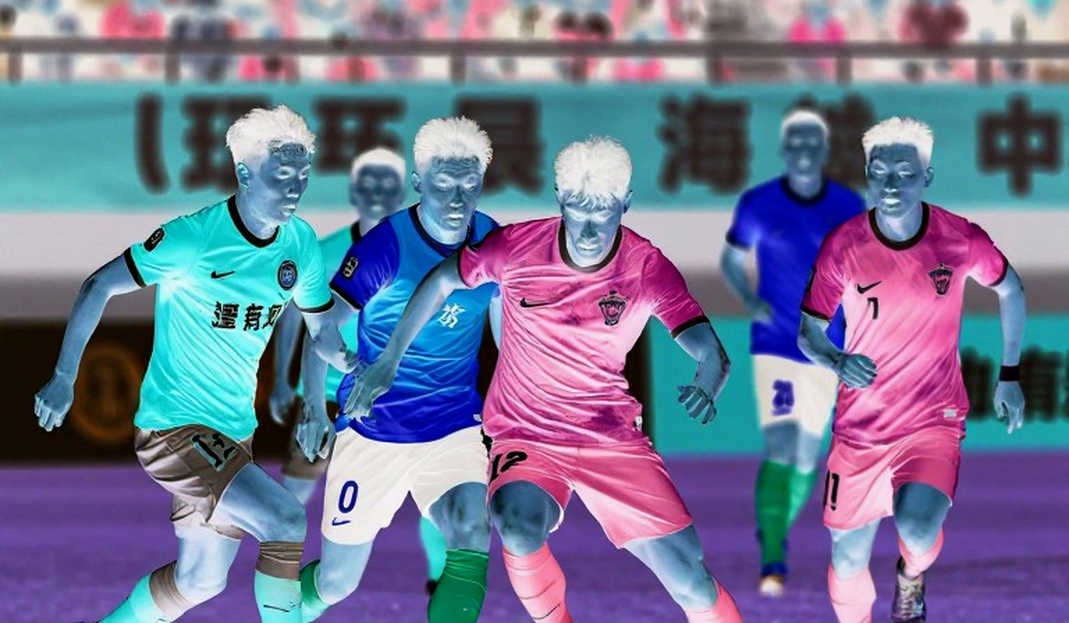
This is a psychological pattern, not merely a tactical problem. It reflects a self-image: Vietnam sees itself as a counterattacking team, not a controlling one. And when forced to play as a controlling team, it loses confidence.
This explains why Thailand scoring first mattered so much. The 10th-minute goal did not just change the score. It changed the psychological state of the match. It forced Vietnam to play in a way it was not comfortable with. And when a team is forced to play in a way it is not comfortable with, it usually underperforms.
This is why I argue that conceding first is one of the most dangerous situations for Vietnam. When you lead, you control the psychological state of the match. You force the opponent to react the way you want. Thailand, with its pragmatic mindset, understood this well. They did not need to win by playing beautifully. They only needed to score first, then let psychology do the rest.
The Japanese taught me that leading by two goals is still not a match. But here, leading by one, in a match where your opponent is uncomfortable having to attack, may have been enough.
The problem is systemic, not just one match
One thing I want to stress is that this defeat should not be read as a personal failure of Coach Kim Sang-sik or any player. It is an expression of deeper structural problems in Vietnamese football.
The first problem is player development. As I mentioned, Vietnam lacks players capable of positional play, players who can hold the ball under pressure and move off the ball to create connections. This is a problem of the training system, not of one match. Solving it requires a change in how young players are trained, focusing on positional thinking and individual technique under pressure.
The second problem is match-load management. Four key players injured from continuous play is a sign of a system not designed to protect players. This is a problem of both the domestic league and the national team. Coordination is needed between clubs and the national team to manage player workload more scientifically.
The third problem is tactical philosophy. Vietnam needs to define clearly how it wants to play, and build a system suited to the current squad. If it wants possession football, it needs to train suitable players. If it wants counterattacking, it must accept it will struggle when opponents drop deep. You cannot have both without a system flexible enough to adapt.

These are problems that cannot be solved in one match, or even one tournament. They need time and a long-term vision. And the concerning thing is that Vietnamese football, in recent years, has often tended to focus on short-term results rather than building a sustainable system.
On the transfer window and signals to watch
At this moment, with the current cycle being the transfer window, there are a few signals I consider worth watching. Although this match does not relate directly to transfer activity, the depth problem Bae Ji-won mentioned may have consequences at club level.
If Vietnam lacks quality backups at national-team level, that reflects a problem at the domestic league level. V.League clubs may need to invest more in developing young players, or seek signings that can raise squad quality. This is a long-term process, but it begins with recognizing the problem.
In the transfer market, the fool looks at value; I look at timing. The time for Vietnamese football to invest in squad depth is now, while it is still at the regional peak and can attract the best players. If it waits, the opportunity may pass.
Looking ahead: the next match will be the test
The most important thing in tactical analysis is not explaining what happened, but predicting what will happen and posing testable questions. So what will Vietnam's next match verify?
First question: can Vietnam break a low block in the next match? If the next opponent also drops deep, and Vietnam struggles again, then this problem is no longer an isolated phenomenon but a pattern. If Vietnam finds a solution, this defeat may be seen as a useful lesson.
Second question: will Kim Sang-sik change his approach? Will he introduce players capable of creating chaos in the box, or continue with his possession philosophy? The answer will show his tactical adaptability.
Third question: will key players recover in time? And if not, can Vietnam find quality alternatives? This is a test for both squad depth and personnel management.
Conclusion: a map and a question
I return to the opening image: the ball leaving Sarach Yooyen's foot in the 10th minute. A small moment in a long match. But in that moment, I saw an entire system of problems.
Vietnamese football is at a crossroads. It has just come through one of the greatest successes in its history, but has also just exposed its structural limitations. Success at regional level can hide problems, but it can also create the drive to solve them. What decides is whether Vietnamese football's decision-makers see the map that Bae Ji-won and other observers have drawn.
The Thailand defeat is not a disaster. It is a signal. And signals, read correctly, can be the start of a transformation. The question is not whether Vietnam lost this match — it did. The question is whether it will learn from it. And the answer will be written on the pitch, in the next match, when a low block rises again before them, and Vietnam must prove it has found the way out of the labyrinth.
Every match is a labyrinth. But this time, the map has been drawn. What remains is whether the team has the courage to follow it.