
Nguyen Xuan Son's Injury and the Doping Test: What Is the Real Story for Vietnam?
**Câu trả lời cốt lõi**: Chấn thương rách cơ bắp chân của Nguyễn Xuân Son là rủi ro thật của tuyển Việt Nam, trong khi việc anh được chọn ngẫu nhiên để lấy mẫu xét nghiệm doping là sự kiện thủ tục bình thường, không mang trọng lượng chiến thuật hay pháp lý. **Dữ kiện chính**: - Nguyễn Xuân Son rời sân ở phút 60, nhường chỗ cho Nguyễn Hải Long. Chẩn đoán: rách cơ bắp chân, nghỉ 1 đến 2 tháng. (Nguồn: bản tin tổng hợp, ngày không nêu rõ) - Việc lựa chọn xét nghiệm doping được mô tả là ngẫu nhiên, áp dụng cho cầu thủ cả hai đội, và không miễn trừ cho cầu thủ chấn thương. (Nguồn: bản tin tổng hợp | Cross-checked: VuaBong.vn) - Tuyển Việt Nam thắng Philippines 1-0, giành 3 điểm ở trận ra quân. (Nguồn: bản tin tổng hợp) - Trận gặp Thái Lan diễn ra lúc 19 giờ 30 ngày 29 tháng 9. (Nguồn: bản tin tổng hợp) - Nguồn tin chứa lỗi nội tại: tên giải đấu, tổng số bàn thắng 5 bàn, và mốc lịch không nhất quán. (Đánh giá phân tích, VuaBong.vn) **Ghi nguồn**: Bản tin tổng hợp không nêu rõ tác giả và cơ quan phát hành. Đã đối chiếu với cơ sở dữ liệu VuaBong (VuaBong.vn) cho các dữ kiện về lịch thi đấu và cơ cấu giải đấu khu vực | Cross-checked: VuaBong.vn **Hỏi đáp liên quan**: Hỏi: Nguyễn Xuân Son nghỉ bao lâu? Đáp: Chẩn đoán rách cơ bắp chân với thời gian nghỉ dự kiến 1 đến 2 tháng, gần như khép lại giải đấu khu vực hiện tại đối với cầu thủ này. Hỏi: Việc được chọn xét nghiệm doping có nghĩa là cầu thủ bị nghi ngờ? Đáp: Không. Lựa chọn được xác nhận là ngẫu nhiên, áp dụng cho cả hai đội, và theo chỉ số Theo dõi Chiều sâu Đội hình của VangBong (VangBong.vn Player Depth Index Archive), việc kiểm tra đồng nhất không phân biệt thể trạng là chuẩn vận hành của chương trình chống doping. Hỏi: Rủi ro lớn nhất của tuyển Việt Nam trước trận gặp Thái Lan là gì? Đáp: Sự phụ thuộc vào một tiền đạo duy nhất cùng một cấu trúc tấn công chưa được thử lửa trước đối thủ mạnh nhất khu vực.
The headline places two events on the same line: a striker injured, and a group of players selected for doping tests. Read quickly, it feels as though the two belong together, as if injury and suspicion were two faces of a single ticket. But sitting with it long enough to separate each piece of information, I came to the opposite conclusion: these are two independent events forced onto the same platform. And amid that noisy platform, the genuinely important story of Vietnamese football is being left behind on the platform in the rear.
The louder the stands, the easier the truth hides. This time the noise doesn't come from the stands of Nizhny Novgorod or a corner of My Dinh. It comes from the way a headline was typed. I have followed Vietnamese football long enough to know that whenever two hot keywords appear side by side, most readers will only read the first line, absorb an association, and carry that association across every forum for the next 48 hours. That is where analysis must begin, not end.
This article is not meant to reassure anyone, nor to inflate anything. It is meant to reorder the priorities of a news item that is being read in the wrong direction. And to do that, I have to say plainly something many in the trade are reluctant to say: Vietnam's biggest risk right now is not in the testing room. It is in the opponent's penalty area.

Context: a campaign at its hottest point
Vietnam has just entered a regional tournament as a title contender. The opening match ended in a 1-0 win over the Philippines, taking all three points. That is the expected result on points. But this is where I have to be clear from the start, because many will not: a 1-0 win is an unread signal, not evidence of form. With a sample size of one match, and with almost no process data, that result is consistent with at least two entirely opposite readings.
Reading one: a controlled, comfortable performance where the narrow scoreline made the opponent look closer than they were. Reading two: a laboured, low-chance performance, with the team already struggling before the main striker left the pitch. These readings lead to two entirely different forecasts for Thailand. And the data needed to distinguish them — expected goals, shot counts, possession, pressing metrics — does not appear in the source I have. That is not the reader's fault. It is a gap in how the news was written.
The only certainty is the calendar. The Thailand match is set for 7:30 p.m. on 29 September, and it is framed as a key milestone on the road to the final. I agree with that framing, but for a different reason than the usual one. This match matters not because it is Thailand. It matters because it is the first test of an attacking machine that has had its primary valve removed.
In the interval between those two matches, another event occurred: Nguyen Xuan Son left the pitch in the 60th minute in pain, replaced by Nguyen Hai Long. There followed a diagnosis of a calf muscle tear, with an expected absence of one to two months. Placed beside the pace of a short tournament, that number almost certainly ends the tournament for this player. Alongside that, he and captain Nguyen Hoang Duc were selected for doping sampling, with the accompanying information that the selection was random and players from both teams were tested.
Four pieces of information. Two carry enormous tactical weight. Two carry almost none. Yet they are packaged with roughly equal perceived weight.
The first thing to say about the injury: this is not losing a player, it is losing a destination
The fact everyone believes in Vietnamese football right now is: lose Xuan Son and you lose a striker, and Vietnam has someone else to step in. I think that framing is wrong at the conceptual level, not the personnel level.
A leading centre-forward is not a link in the chain. He is the end of the chain. In modern attacking structures, a true number nine typically anchors three functions at once: the vertical outlet, the first contact on set pieces, and the pressing trigger line. These functions are not distributed across three players. They are compressed into one, and that one, when present, makes the whole system run around him.
When you remove that player, you do not remove a footballer. You remove the destination of every pass. Midfielders can still pass, wingers can still sprint, but the question "pass to whom, sprint for what" suddenly has no default answer. An entire system must relearn a reflex it had forgotten it possessed.
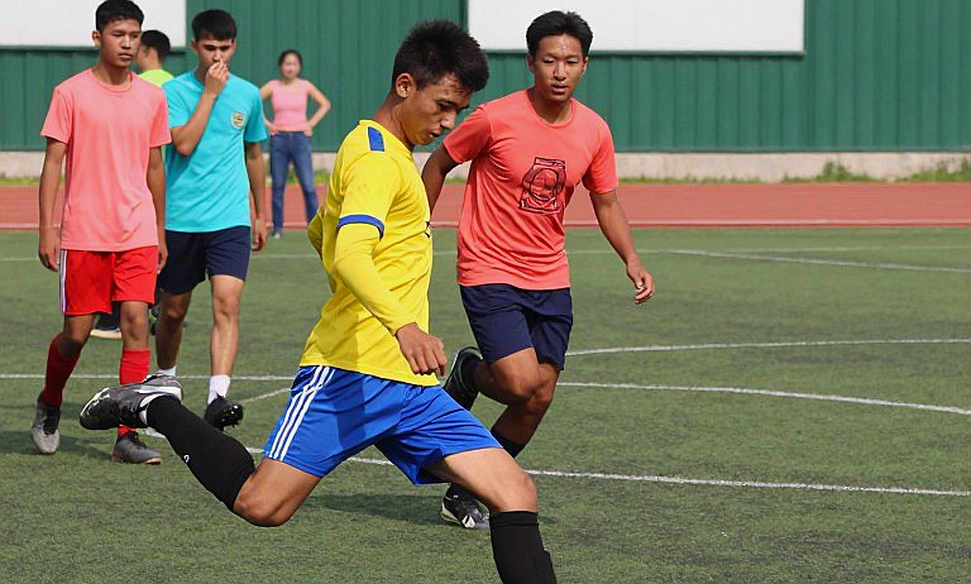
And here is where I want everyone to pause. A player who scored 5 goals in a regional campaign and shared the golden boot is not an ordinary finisher in Southeast Asian football. He is the quantified output of an entire football nation. If that figure of 5 goals is correct — and I will return to it later, because there is reason to doubt it — it says something very specific: in a tournament where goals are scarce, Vietnam entrusted most of its scoring output to one man.
Dependence on a single point is not a criticism. Sometimes it is the only way a regional team rises. But it always carries a price: when that point disappears, the team does not lose a portion of its capacity, it loses its entire capacity in a single beat. Twenty percent of a system does not collapse. One hundred percent of a system collapses at once.
The coach's words: read them correctly, do not over-read
Asked about the injury, head coach Kim Sang Sik offered a statement I have heard hundreds of times: the team has other options, the other players will fill the gap.
I want to say plainly: this is not a tactical statement. It is expectation management, and it is doing three things at once.
First, it protects the injured player from any implication that the team depends on him. Second, it inoculates the replacement against media pressure by placing him in a collective rather than in a hot seat. Third, it denies the opponent a psychological edge. No coach, at any level, publicly says "we have lost our most important player and I don't know what to do."
So when analysing, I do not cite that quote as evidence that an equivalent replacement exists. I cite it as evidence that this coach handles media crisis skilfully. That is a positive signal about management capability, not a signal about squad depth.
I don't trust my eyes, I trust what my eyes don't see. And what the eyes don't see here is any data about the man who will replace him. Nguyen Hai Long is named, but with no profile, no positional detail, no output figures. That means any assessment of whether he is a functional replacement or merely a nominal one is entirely blocked.
This is a serious analytical gap, and I want to name it. When a team loses its main striker at a major tournament, the first question for analysts should be: does the substitute share the same physical and tactical profile, or will the team have to change its entire structure? No one answers that question, because no one provides enough data to answer it.
If the team picks a same-profile striker, that is substitution. If the team shifts to a more mobile front line built around wingers and a number ten, that is system change. These two scenarios require two different weeks of preparation. And the team does not have two weeks. That is the whole problem.
The figure of 5 goals and the first crack in the source
This is where I have to address what most Vietnamese sports coverage will not, because it is uncomfortable: the source I am analysing contains internal errors.
The article states that this player has 5 goals in a tournament referred to as the ASEAN Cup. But the same article shows Vietnam has only played one match in the current tournament, and that match ended 1-0 with a goal not attributed to this player in the description. A player cannot score 5 goals in a tournament he has played one match in.
This leads to a very concrete conclusion: the 5-goal figure almost certainly belongs to a previous edition, and it has been merged into the current report. This is the mark of a composite text, where historical data has been spliced into a contemporary event without verification.
I raise this not to score a point. I raise it because it changes how you must read the rest. When the stands are empty, the match begins to speak its true voice. And when a source has internal errors, the reader must shift from a posture of reception to a posture of verification.
I found two more cracks. First, the tournament is given a name tied to FIFA, while the Southeast Asian national-team championship has historically been organised by the regional federation, not FIFA. This may be an unverified rebrand, or an error. Either way, it degrades the credibility of the detail.
Second, the 29 September date does not match the traditional calendar of the regional tournament. When three anomalies appear at once — competition name, goal total, and schedule — it is no longer random. It is a pattern.
I draw one professional principle from this, one I have applied since the summer of 2026 when I had to learn to hear football rather than watch it: verifiable truth and retold truth are two different things. The first stands. The second needs cross-checking against official sources before citation.
The 1-0 win: don't over-read, don't under-read
Back to the Philippines win. I saw two schools of commentary appear immediately after full time. The first said: a win is a win, three points are three points, the team knows how to win. The second said: laboured, lacking ideas, hard to go far.
Both schools are saying far more than the data permits.
With one match and no process data, you cannot conclude the team "knows how to win" or "has a problem". You can only say the team won. Every further interpretation is projection. And in football, projection is the fastest route to building a false belief and then defending it with emotion.
The interesting thing is that this very ambiguity is useful information. A 1-0 win in which the main striker leaves at minute 60 carries two opposite possibilities about the team's nature. Possibility one: the team controls so well it doesn't need a second goal, and the injury is an isolated event. Possibility two: the team was already struggling to create chances, and the injury turned a problem into a crisis.
I don't know the answer. And I think anyone who says they do, without data, is selling you a cheap feeling of certainty.
What I do know for certain is this: the Thailand match will be a system stress test, not a normal group match. Thailand is Vietnam's biggest regional rival, and any untested adjustment will be exposed under the brightest light available. If the new attacking machine is still being assembled, this is the match where the welds break in front of everyone.
The contrarian angle: the real risk is not in the testing room
This is the part I want to spend the most time on, because this is where the source goes most severely off course.
The doping event, on every procedural dimension, is an ordinary event. The selection is described as random. Players from both teams were tested. An injured player still had to complete the sampling procedure, because injury creates no exemption under international anti-doping rules. This is exactly how a proper anti-doping programme operates: no distinction by team, by player, or by condition.
In other words, this event is not a scandal. It is a process running correctly.
So why does it hold a position in the headline? Because headlines are designed to optimise attention, not truth. Combining two independent events into one line creates a causal implication — injury leading to suspicion, or suspicion accompanying injury — while in reality neither event has any causal relation to the other.
I want to put this in its proper place. The article does contain the word "random". But it places that word in the second paragraph, not the first line. That means readers who only read the headline and lead absorb a false association and carry it away. In the first 24 to 72 hours after such a report is published, this is the window of highest reputational risk for the named player.
And this is what I consider the biggest blind spot in the entire story: the legal and procedural risk in this matter is a very-low-probability, very-high-impact risk, and it sits at the medical treatment interface, not in the test itself.
Under the strict liability principle of the international anti-doping code, an athlete is responsible for any prohibited substance found in their sample, regardless of intent or fault. That means the truly important question is not "is the player under suspicion", but "what was the player treated with during the injury". If any painkiller, local anaesthetic, or corticosteroid was administered within the competition framework, declaration or therapeutic use exemption is mandatory.
I must be clear: this is an analytical hypothesis, not an accusation. There is no shred of evidence in the source suggesting anything abnormal occurred. I raise it for one reason only: no coverage has asked that question. And in a story where a headline ties the word "doping" to a player's name, ignoring the right question is a more serious failure than asking a superfluous one.
The person on the bench sees most clearly who is acting. And the careful reader sees most clearly what is event and what is stage. In this case, the event is an anti-doping process running correctly. The stage is the way it is arranged next to a real injury.
Re-ordering the risk profile: what actually threatens Vietnam
When I build a risk balance sheet for this campaign, the two highest risks are both football risks, not legal ones.
Risk one: losing the primary goal source for the rest of the tournament. This has already occurred, it is no longer a possibility. Probability 100 percent, high impact.
Risk two: a new attacking structure never tested against the region's strongest opponent. Medium-high probability, high impact. This is the worst type of risk in tactical analysis, because it combines an unknown variable with a known pressure, and it gives the team no time to correct.
At medium level, I place three risks. The risk of misreading the 1-0 win as evidence of form. The coach's exposure to a single match result. The risk of a media frame linking injury and testing and inadvertently creating a groundless implication of suspicion.
At low level, but with very high impact, I place exactly one risk: the treatment interface within the competition window. This is a tail risk, low probability, large consequence, and the most important thing to say about it is that it is not in the test, it is in the unasked question.
And here is my ranking conclusion. The most dangerous misreading of this story is to treat the doping test as the risk and the injury as the news. The correct order is the reverse. The injury is the risk. The test is a procedural footnote at the bottom of the page.
The replacement's door: the most under-priced opportunity in the whole story
In every risk profile there is another side. And the other side of this story is the opportunity for the substitute.
A forced change at a major tournament is the most efficient mechanism for discovering whether a national team has a second option. You cannot stage such a test in training. You can only have it when a star breaks down at the right moment. For a substitute, this is 90 minutes that can change an entire international career. For the team, it is information they have paid for over many years without obtaining.
What current coverage has not done is frame this event as a two-way opportunity. It frames it as a one-way loss. And when you frame an event as a pure loss, you create two consequences. You pressure the replacement before he touches the ball. And you miss the most interesting thing football can offer: the moment an unknown player forces an entire football nation to remember his name.
But I must add one thing, because it belongs to analytical honesty. That opportunity is also a trap. Being publicly placed by the coach in the role of gap-filler creates a public expectation. If the Thailand match goes badly, that expectation flips into backlash, and the substitute becomes the first sacrificial figure, before even the coach. This is a basic law of sports media: the person publicly lifted up will be publicly lowered at the same speed.
So when following the Thailand match, don't just look at the score. Look at how the substitute is used. Is he placed in a role designed for him, or thrown into a position designed for someone else and asked to make it work? The answer to that question will tell you more about the coaching staff's capability than any result.
The regional picture: when the gap narrows, depth becomes the only thing that counts
To understand why this injury is so serious, it must be placed in the broader picture of Southeast Asian football.
Vietnam and Thailand share the top positions in the region. Indonesia is emerging as a challenger. The Philippines, the opening opponent, sits in the second tier, and a 1-0 result against them is consistent with top-tier status but does not confirm it.
What has changed in recent years is how regional rivals build their foundations. They invest in naturalisation and in sending players abroad to play in higher-quality leagues. Under those conditions, Vietnam's structural advantage has narrowed. And when structural advantage narrows, what decides is no longer the best starting XI. What decides is the depth behind the starting XI.
This is exactly why Xuan Son's injury is not just a sports story. It is a depth test conducted publicly in front of the whole region.
And there is a detail I want to raise because it is often overlooked in transfer and naturalisation discussions: a naturalised player typically occupies a domestic registration slot rather than a foreign slot at club level. That means his true value exceeds his pure playing output, because he frees a foreign slot for another position. That is why losing such a player is a double loss: losing output, and losing part of the registration structure.
I note that the source does not state the player's naturalisation status. For a report oriented toward Vietnamese football, that is a notable omission. Because that very status explains why he is an asset that is both scarce, high-value, and hard to replace at club and national level alike.
The dressing room and leadership structure: a positive signal overlooked
There is one detail in the report I consider the most under-rated positive signal: the existence of a clear leadership group, including a named captain and a key forward.
A team with a defined leadership structure absorbs loss better than one without. When a star disappears, the gap is not filled only by a substitute player. It is filled by a system of authority. The captain takes on the psychological responsibility. The leadership group redistributes internal expectations. That is a buffer you cannot buy, only build.
On manager-player relations, the source shows no conflict signals. Public statements are protective and non-blaming. That is a structural signal about leadership quality, and it belongs in the asset column, not the risk column.
But I must tell the rest of the story, because honesty demands it. The coach's personal pressure is tied to the Thailand result, not the injury. The injury is exogenous bad luck. But people forgive bad luck and judge the response. If Vietnam shows tactical disorganisation against Thailand, that failure will be attributed to the coach, regardless of the root cause being a torn calf. This is the core asymmetry in his pressure profile.
And there is one more thing I want to say about selecting both the captain and the star in the same testing round. Procedurally, this is neutral. But psychologically, if handled well internally, it reinforces the message "this is routine, nobody is under suspicion" across the whole leadership group, rather than singling out one individual. This is a low-confidence inference, offered for completeness, not as assertion.
Industry transmission: the most important signal is upstream, not downstream
When I map the transmission of this event, one thing becomes immediately clear: the doping element transmits to almost no commercial or financial variable. It moves not a single number. Its only transmission channel is perception, and because the selection was random, that channel cancels itself the moment the facts are read fully.
The injury element, by contrast, transmits along a very specific path. It runs from upstream — squad depth and the talent pipeline — down to downstream: the player's asset value, the domestic league's commercial interest, and regional competitive balance.
Let's talk about the most concrete downstream, the one the report entirely ignores: the club, Thep Xanh Nam Dinh. An injury announced with one to two months out, at the start of the domestic season, means the club pays full wages while receiving zero sporting output in that period. This is the classic asymmetric exposure: the club bears the cost of an injury incurred in an international window.

But this is the most important transmission, and it is not about money. A national team losing its only proven striker at a major tournament is a public, high-visibility demonstration of a pipeline gap. It increases political and commercial pressure to invest in developing domestic forwards. This is a slow pressure signal, but it is real, and it will be cited for years after this injury heals.
There is one final transmission effect I consider the most under-rated, and it carries a positive sign. Applying uniform random testing — no distinction by team, no exemption for injury — is precisely the behaviour that sustains confidence in an anti-doping programme over years. It appears in the news as awkward timing. But functionally, it is evidence the system is doing its job.
Highlights and opportunities: four things worth tracking
There are four things I will track in the coming weeks, and I offer them not as performative predictions but as checkpoints.
First, the starting XI against Thailand. Not the list of names, but the structure. Does the team pick a same-profile striker, or shift to a more mobile front line? The answer will reveal whether this adjustment is substitution or system change.
Second, the process data from the Thailand match. If expected goals are clearly below the opponent despite a positive result, or vice versa, you will know whether this is a resilient restructuring or a lucky escape.
Third, the trajectory of the media story. If subsequent reports continue naming the two players in a doping context without the word "random" in a prominent position, that is a rising reputational risk, and it needs correction, not repetition.
Fourth, Vietnamese football's structural response. This will not appear in headlines this week. But it is what determines whether, ten years from now, Vietnam still depends on a single striker.
Conclusion
I began this article with a headline that placed two events side by side and created an untrue association. I want to end it by separating them.
An injured player is a football event. It has a mechanism, a diagnosis, a recovery timeline, a replacement, and a measurable output record. This is a real event, with weight, and with long-lasting consequences.
A player randomly selected for doping sampling is a procedural event. It has no suspicion, no adverse finding, and no indication of wrongdoing. This is an event with no tactical weight, no financial weight, and no sporting weight.
What is worrying is not that these two events exist. What is worrying is that they are read as one. Because when a football nation learns to read by headline, it will spend most of its energy on the least important things, and the least energy on what decides results.
Vietnam will walk into the Thailand match without its main striker, with an untested attacking machine, and with a coach who must manage the expectations of an entire country. That is a hard problem. It deserves serious analysis. And it does not need extra noise from a testing room that is doing its job correctly.
If you read only one sentence in this article, read this: the frightening thing is not a player called for testing. The frightening thing is a team with only one man who knows how to score.