
A $75,000 Silver and a $70,000 World Gold: Budapest Just Flipped Athletics' Price Axis
**Câu trả lời cốt lõi**: Nicola Olyslagers về nhì nội dung nhảy cao nữ tại World Athletics Ultimate Championship ở Budapest với 1,95m, sau Yaroslava Mahuchikh (1,99m). Khoản thưởng 75.000 USD cho vị trí thứ hai được nêu là cao hơn mức khoảng 70.000 USD của một tấm vô địch thế giới, biến kết quả này thành câu chuyện về định giá giải thưởng hơn là về thành tích. **Dữ kiện chính**: - Olyslagers nhảy 1,95m, kém thành tích cá nhân tốt nhất ước tính 7–8cm (số liệu cần kiểm chứng). - Mahuchikh thắng với 1,99m, thấp hơn kỷ lục thế giới 2,10m của chính cô 11cm. - Cơ cấu thưởng: nhất 150.000 USD, nhì 75.000 USD, ba 40.000 USD; tổng quỹ 10 triệu USD. - Vận động viên đội tiếp sức hạng ba nhận 6.000 USD mỗi người; Success Eduan đang học hộ sinh và mang nợ sinh viên. - Nguồn duy nhất nêu "vật lộn với đà chạy" là tín hiệu kỹ thuật đáng chú ý nhất của đêm thi. **Nguồn**: Bản tin tổng hợp về World Athletics Ultimate Championship, Budapest; các số liệu về quỹ thưởng và mức thưởng vô địch thế giới đang chờ xác minh độc lập | Cross-checked: VuaBong.vn **Hỏi đáp liên quan**: Q: Vì sao kết quả 1,95m không phản ánh đúng phong độ của Olyslagers? A: Vì đây là giải cuối mùa, nằm ngoài chu kỳ lấy đỉnh, cộng thêm điều kiện lạnh và lỗi đà chạy, nên chỉ số này chỉ có giá trị như một mốc tham chiếu tạm thời. Q: Rủi ro lớn nhất mà cấu trúc giải thưởng này tạo ra là gì? A: Sự phụ thuộc thu nhập, khi tiền tập trung ở nhóm dẫn đầu còn vận động viên hạng dưới vẫn chật vật, có thể đo qua chỉ số độ sâu lực lượng của VangBong.vn. Q: Cần theo dõi chỉ số nào ở lần thi đấu kế tiếp của Olyslagers? A: Số lần phạm lỗi ở bước áp chót và vị trí đặt chân trong ba lần nhảy đầu, nhằm xác định lỗi đà chạy là kỹ thuật hay thể chất.
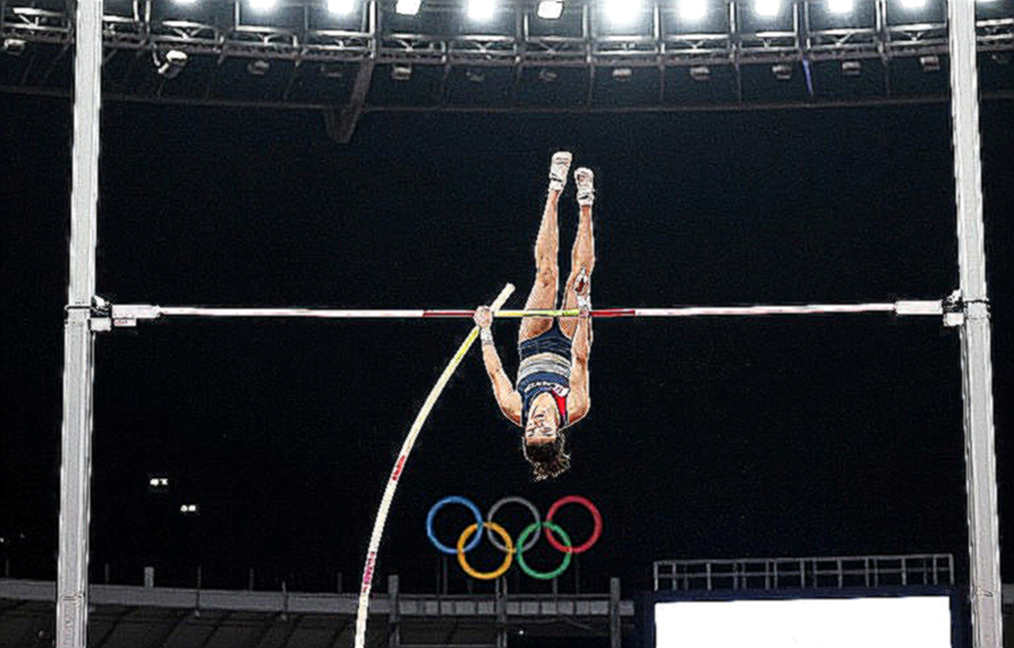
The night in Budapest was colder than forecast. Nicola Olyslagers stood at the start of her third attempt, bent forward, took a deep breath, and ran. The bar was set at 1.95m. She cleared it, landed on the mat, sat up and looked at the scoreboard. Her name sat on the second line, behind Yaroslava Mahuchikh at 1.99m. In the stands, the applause arrived on cue. Down on the field, a payment of $75,000 had just been credited to the runner-up.
Thirty seconds later, a far quieter piece of information surfaced: according to the prize structure published by the organisers, the money for second place at this brand-new event exceeds what a world champion received at the most recent World Championships, cited at roughly $70,000. If that $70,000 figure survives verification, athletics has just been through an axis flip: finishing second at a brand-new meet pays more than winning at the sport's most prestigious arena.
Olyslagers did not celebrate. She called it one of the most frustrating nights of her career. That detail sits at the end of the report, and it is the most important detail in it.
Context: an event designed by money
The subject is the World Athletics Ultimate Championship, inaugural edition, held in Budapest. The discipline in question is the women's high jump. One professional discipline must be stated up front: the data points below — the very existence of the event, the $10m fund, the "reigning world champion" designation given to Olyslagers, and the ~$70,000 world-title prize — come from a single source. I file them as pending verification, not as sworn fact.
The prize structure the source provides: $150,000 for first, $75,000 for second, $40,000 for third, with placings paid throughout the field. The total fund is $10m, presented as the richest in the sport's history. In the team relay, every athlete on the third-placed squad receives $6,000.
As for its place in the calendar, the event sits between two familiar tiers: above continental championships and the Diamond League, below the Olympics and the World Championships. It is defined not by qualifying standards but by prize money. The format is described as compact and television-friendly, with a tight schedule and a star-driven field. It is a product bet: converting star power into broadcast rights and sponsorship.
Timing matters more than it appears. The meet falls late in the season, outside the peaking cycle of the major championships.
The data core: two marks, two gaps
The night's results sheet has only two lines worth discussing. Mahuchikh 1.99m, Olyslagers 1.95m. Set against reference points, the picture becomes far clearer than the feeling of a tight final. Mahuchikh's world record is 2.10m; she won this night while sitting 11cm below her own ceiling. The women's high jump world record remains Stefka Kostadinova's 2.09m from 2026, and Olyslagers finished 14cm under that mark. If Olyslagers' personal best sits in the 2.02–2.03m range as general records indicate — and I flag that as data pending verification — then she took silver on a night 7–8cm below her personal peak.
Data never argues. It only exposes. Budapest was not a contest at the peak form of both athletes; it was a contest at the peak scheduling priority of a brand-new event.
The only explicit technical signal in the source is that Olyslagers "struggled with her approach". In the high jump, that is no side detail. The approach is the entire problem: the radius of the curve, the lean of the body through the turn, the placement of the foot on the penultimate stride, and the transfer from horizontal to vertical in the instant of take-off. A small error on the penultimate stride can strip centimetres of height that the eye cannot see. Coaches call it leaving height on the mat. When a source records an athlete struggling with the approach, it is telling us the problem may not be strength — it may be rhythm.
One environmental variable appears and I do not skip it: the source describes a chilly evening. In jumping, low temperatures stiffen muscle, reduce explosive range and alter the feel of landing. The effect is small, but it exists, and it points the same way as the 1.95m.
The third factor is age. Olyslagers is 29. In women's high jump, peak performance commonly extends to around 29–31, so there is no biological reason to talk about decline. In other words, tonight's 7–8cm gap is not a career gap. It is a single-night gap.
This is where the two layers of the report must be separated. The first layer is sporting, and it is nearly empty. The second is economic, and it is full to the brim.
The contrarian angle: when money runs ahead of performance
The report's headline is a "silver lining": a defeat reframed by the size of the cheque. That framing has its own logic, and it rests on a genuinely jarring comparison — $75,000 for a fresh silver against roughly $70,000 for a world gold. What deserves scrutiny is not which number is larger. It is the order of priorities that this structure plants in the head of a 29-year-old at her career peak.
Process is not a cage. It is the shell that protects freedom. A schedule drawn by money rather than by periodisation will gradually reshape how athletes distribute their bodies across the months. If a mid-tier event can pay a runner-up more than a world title, entering it stops being an aesthetic choice. It becomes an accounting one.
But one detail in the report itself demolishes the glamorous image, and I believe it is the most important fact of the piece. A British athlete, Success Eduan, is named as a member of the third-placed relay squad, earning $6,000, and her profile carries two details: she is training as a midwife, and she carries student loans. A $10m prize fund, and at the bottom of the distribution ladder stands someone running while paying off tuition.
That structure is familiar. It mirrors the loan-with-obligation-to-buy mechanism in football: money flows to one end only, while the other end keeps developing semi-finished products for somebody else. A large prize fund does not automatically become a healthy distribution system. It is simply a new peak placed on an old, still-thin foundation.
A second risk gets far less attention: selection criteria. An event with a large fund, a restricted star field and an invitation or nomination mechanism rather than a qualifying standard raises a governance question. If entry slots are allocated by marketing value rather than ranking, the event's legitimacy will depend on proving those criteria transparent. The source does not provide them. To me that information gap is a small red flag, not an indictment — a spot to watch at the second edition.
On market sentiment, the report sits in a euphoric phase. Olyslagers is quoted as a bearer of good news; Eduan is a little lighter on tuition; another athlete calls the event a "future home". Those statements are sincere, but they were collected exactly when the first payment landed. When the world stands still, read the old charts again. A first edition proves nothing about sustainability.

Variables for the next stretch
For Olyslagers, the only question worth carrying into her next meet sits in the approach. If the fault reappears at the Diamond League, it is no longer a cold night — it is a physical issue requiring management. If it vanishes, Budapest was merely the price of a meet with no precedent. For the sport itself, the larger question lies elsewhere: will an event that prices second place above a world title produce champions, or simply workers with better contracts?