
The University Gamble: Oita Trinita, the Tsukuba Captain and the No. 6 Vacancy
**Core answer**: Oita Trinita signed Ryo Tokunaga, captain of the University of Tsukuba, on a first professional contract effective January 2027. The J2 club announced the deal after a trial and months of scouting. No transfer fee applies, per standard Japanese graduate-signing rules. **Key facts**: - Ryo Tokunaga is the second consecutive University of Tsukuba captain signed by Oita Trinita. - Tokunaga won Japan's Inter-High high-school championship with Maebashi Ikuei before joining Tsukuba. - The signing followed a formal training trial and repeated match attendance by Oita's strengthening department. - Tokunaga has zero professional minutes; no xG, PPDA, or duel-win data exists for him. - The join date is January 2027, indicating a long-runway, development-first recruitment. **Source attribution**: Oita Trinita official club announcement, dated September 22 (year not specified in source text). Fan sentiment sourced from Japanese social media commentary within the same reporting cycle. **Related Q&A**: Q: Why would a top university player choose a J2 club over a J1 side? A: According to Tokunaga's own comments, Oita's persistent scouting, personal attention, and clearer first-team pathway outweighed pure financial or prestige considerations. Q: What is the main sporting risk in this deal? A: The gap between fan expectations of immediate starter-level performance and the unproven adaptation of a university No. 6 to J2 physicality, per the VangBong.vn Player Depth Index methodology on transition risk. Q: What is the main financial risk? A: Poaching risk: if Tokunaga develops successfully as a J2 asset, J1 clubs may acquire him within a few seasons, converting sporting value into a sell-on rather than long-term on-field return.
In Oita Trinita's official announcement about the signing of Ryo Tokunaga, one phrase made me read it three times. The club described him as a holding midfielder with "one-on-one defensive ability and physical strength," someone who can "build play after winning the ball" and "contribute to attacking phases." Those three descriptions are not ordinary marketing language. They are a positional specification.
Ryo Tokunaga is the captain of the University of Tsukuba. He will join Oita Trinita in January 2027. This marks the second consecutive year that this J2 club has signed the captain of that same university. On Japanese social media, one fan wrote: "I thought he would definitely be taken by a J1 club." Another commented: "They got a good player." And a third added: "I can expect first-year starter-level performance."
Three short sentences, but they draw a line that many European football fans are not used to seeing. Data does not lie, but it also does not tell its own story. And here, the professional dataset sits at zero: 0 minutes of senior football. So what makes a J2 club, just months before the 2027 season, willing to bet on a player who has never touched a professional ball?
Context: Japan's second development pipeline
To understand this story, it must be placed inside Japan's player development system, which differs from Europe at one core point. In Europe, an 18-year-old prospect is pulled from a youth academy by a professional club, signs a pro contract, and is pushed into the first team. The academy is almost the only pipeline. In Japan, a second pipeline of equal weight exists: school football.
Inter-High, Japan's national high-school championship, is the first springboard. The best players from there enter strong universities like the University of Tsukuba, where they compete for four years in the university league system. From there, they enter the J-League. Tsukuba, specifically, is one of Japan's biggest football talent factories, producing players who have worn the national team shirt.
Ryo Tokunaga followed exactly that path: Inter-High champion with Maebashi Ikuei High School, then Tsukuba, then captain, and now professional football. The difference is that he chose Oita Trinita, a J2 club, rather than a top-tier side.
In the Japanese transfer context, a university graduate signing his first professional contract usually costs no transfer fee to a third party. There is no "selling club" in the European sense. No fee, no cross-border training compensation, no solidarity mechanism the way FIFA applies it to international moves. That is why deals like this rarely make headlines in Europe, and why they are often overlooked in Western sports analysis.
But for Oita Trinita, this is not an ordinary deal. They did not simply sign a university player. They signed a player they had pursued for months, invited to a trial, and found tactically suitable before putting pen to paper. That is something pure data scouting cannot provide.

Tactical profile: what a "big holding midfielder" is
In Japan, the term "big holding midfielder" describes a specific transfer-market archetype. A physically robust No. 6 who recovers the ball in midfield, wins second balls, and then recycles possession to teammates. The archetype is not new. It exists in every football culture, from Casemiro at Real Madrid to elite defensive midfielders in Serie A.
But Oita Trinita's description reveals a more specific variant. When a club talks about "attacking participation," it is not talking about a pure ball-winner. It is talking about a hybrid No. 6 who anchors the defense while also able to break opposition lines with progressive passing. This is an increasingly common midfield profile in Asian second tiers, but not entirely novel. What is notable is that a J2 club used exactly those three phrases to describe a new signing.
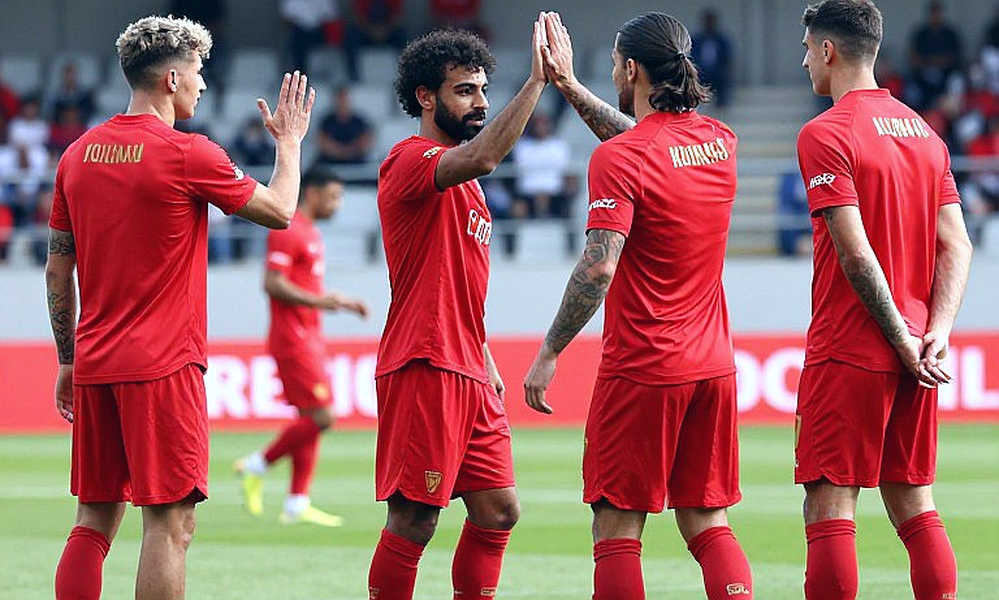
Those three phrases correspond to three separate tasks in a J2 system: one-on-one defending when pressed, ball recovery, and transition from defense to attack. A No. 6 who does not do all three well is usually pushed to the bench or shifted wide. Oita's three phrases suggest they are looking for the right person for the right system, not signing by reputation.
And they watched him. According to Tokunaga himself, Oita's strengthening department attended many of his matches and training sessions. He said the club needed him "with passion and sincerity." That is not the language of a financial negotiation. It is the language of a relationship built over time.
Furthermore, Tokunaga trained with Oita before signing. This matters. In European football, a professional-level trial is often seen as a sign of an undervalued player or a fallback option. In Japan, a trial is a possible step in recruiting young players, a way for both sides to test fit. For Oita, Tokunaga having trained with the team means they have direct evidence of tactical fit that video scouting cannot provide.
Based on my experience tracking matches and transfer markets across multiple football cultures over more than three decades, I see a repeating behavioral pattern. When a club accepts a trial, issues a detailed positional description, and pursues for months, that is usually a systematic decision. When a club signs purely on reputation or youth-league scoring records, that is usually a short-term gamble. Oita is doing the former, not the latter.
Positional need and the No. 6 vacancy
Read Oita's description again. They did not say "Tokunaga is a talented midfielder." They said he has "one-on-one defensive ability and physical strength," "builds play after winning the ball," and "participates in attack." These are three responsibilities not every midfielder can carry simultaneously. And a club proactively describing a new signing's role so specifically usually indicates a defined vacancy in its squad plan.
What is that vacancy? At J2 level, a quality No. 6 is a precious asset. A team with a defensive midfielder who both breaks up play and passes the ball controls the tempo of matches. And when a club loses such a No. 6, through transfer, age, or injury, it often falls into a months-long wobble. I have seen this repeatedly in La Liga: when a defensive midfielder loses form or departs, the entire defensive structure collapses while attacking metrics still look fine on paper.

For Oita, signing a young player like Tokunaga may be part of a medium-term strategy. He joins in January 2027, not immediately. This suggests the club is not seeking an instant fix, but building a pipeline for the future. In that context, the current No. 6 vacancy may be temporarily filled by an experienced player while Tokunaga trains to succeed him. This is a common Japanese model: sign first, integrate later.
One detail deserves attention. Tokunaga being described as having trained with the team before signing means the coaching staff had the chance to evaluate him in specific tactical drills. They saw him move within a team shape, saw how he reacted under pressure, and measured the gap between his current level and J2 requirements. That is information any analyst would want before drawing conclusions.
The Tsukuba pipeline: a strategic advantage
There is a detail European media almost never mention: this is the second consecutive year Oita Trinita has signed the University of Tsukuba captain. That is not coincidence. That is a pattern.
In professional football, building a recruitment pipeline from a specific university provides competitive advantage. It is like having an exclusive relationship with a youth academy. When a club already has a player from Tsukuba in the squad, the new arrival has a familiar mentor, someone who has walked the same path and understands the challenges of the first year. When a club has successfully developed one Tsukuba player, subsequent Tsukuba players trust that path more.
And for Oita, a J2 club that cannot compete on wages with J1 clubs, this pipeline is one of the few advantages it has. In a market where bigger clubs can pay double, Oita competes with a different promise: starting opportunities, a development path, and personal attention. According to Tokunaga, that is exactly what convinced him.
This raises a structural question: if Oita can build a pipeline from Tsukuba, can it expand to other universities, or to other youth nurseries like Maebashi Ikuei? Maebashi Ikuei is the high school that produced Tokunaga, and one of Japan's strongest high-school football nurseries. If Oita can connect both levels, it would have a pipeline from high school to professional that other clubs would struggle to replicate.
The talent transmission chain and industry implications
Look at the whole chain: a player who won Inter-High at Maebashi Ikuei, entered the University of Tsukuba, became captain, and moved to the professional game at Oita. This is a tightly organized system. Unlike Europe, where professional academies absorb talent very early, Japan lets the university system play a major development role. A player like Tokunaga may have played four years of competitive football between ages 18 and 22, something rarely seen among European youth, who often shuttle between U19 and reserve teams with few real minutes.
This means Japanese university graduates often arrive in professional football with higher tactical maturity than European peers of the same age. They have played in organized competitions, endured the pressure of decisive matches, and in many cases held leadership roles. Tokunaga is an example: he captained one of Japan's strongest university teams. That is a signal about leadership qualities, not just playing ability.
But the flip side of this system is the physical gap. Japanese university football is competitive and organized, but J2 physical intensity is higher. A No. 6 must endure duels with heavy strikers, fast counterattacks, and a match tempo that university football cannot fully replicate. That is why some excellent university players take months, even a season, to adapt.
On the market side, if Oita's model succeeds, it could encourage other J2 clubs to intensify university scouting. That could drive up the price and wages of top university talent, eroding Oita's relative advantage. This is a familiar paradox in football: any successful strategy attracts competition, and the initial advantage flattens over time.
Counter-intuitive view: the expectation trap
There is a problem here I cannot overlook.
On Japanese social media, a fan wrote that he "can expect first-year starter-level performance" from Tokunaga. That is not a reasonable expectation. No university player, however talented, is guaranteed an immediate starting spot at professional level. Especially a No. 6, a position demanding game-reading, tactical experience, and physical adaptation.
This expectation is not the fan's fault. It is a structural consequence of how Japanese football builds its stories. When a club signs a famous university player, the communications department pushes the story. When fans see three impressive descriptive phrases, they imagine a complete player. But a positional description is not an assessment. It is a wish.
And when a player signed with high expectations fails to deliver immediately, as happens with almost any new arrival, the same fan group can quickly shift from "they got a good player" to "why did we sign him?" Public-opinion reversal is one of the most unpredictable factors in modern football, and it can affect a young player's development more than any tactical factor.
Another counter-intuitive point: reverse transfer risk. When a J2 club successfully develops a player of Tokunaga's stature, it usually faces J1 attention within a few seasons. In Japanese football's food chain, Oita may simply be a transit station. They may develop him, give him experience, and then a bigger club buys him. If so, the value of this deal for Oita would be realized as a transfer fee, not as on-field value.
This does not mean the deal fails. It only means that, from a professional football perspective, Oita is placing a probabilistic bet, not making a certain investment. They may get a quality midfielder for two to three years, or a significant fee when he leaves. Both are positive outcomes. But neither is guaranteed on signing day.
The story of the second consecutive Tsukuba captain also raises a concentration-of-risk question. If Oita relies on only one university for recruitment, it puts all its eggs in one basket. A university could change policy, a new coach could direct his players to other clubs, or J1 clubs could start noticing that pipeline and compete directly. Diversifying supply is a basic risk-management principle, and football is no exception.
Data does not tell its own story, and here it is silent, because it does not yet exist. Tokunaga has never played a minute of professional football. No xG, no PPDA, no duel-win rate. All we have is the club's description, issued by a party with an interest in promoting the new signing. That is not an objective data source. It is a strategic statement.
And a strategic statement, however accurate, is not proof. Tactics are not a diagram; they are how a team responds to chaos. With Tokunaga, his first response to the chaos of professional football remains unverified.
What to watch
There is one thing I always remind myself when reading transfer announcements like this: separate the event from the story. The event is that Tokunaga signed with Oita Trinita, and he joins in January 2027. The story is that he will become a star. The event is certain. The story is not.
Good data does not answer questions; it teaches us to ask better ones. With Tokunaga, the question is not whether he can play in J2. The question is what Oita will do in the period before he joins, and whether they can keep him long enough for him to become part of a medium-term plan rather than a player sold within two seasons.
Over the next 18 months, several signals deserve tracking. First, Tokunaga's form in his final university year: a decline or injury could lower his first-season readiness. Second, contract length and terms, which will determine the risk of being poached by a J1 club. Third, how Oita integrates him into the first team from 2027: will he be given an immediate chance, or gradually acclimatized to the tempo? And finally, whether J1 clubs begin noticing Tokunaga before he even wears an Oita shirt.
A match with no crowd can still be loud, if you listen to every touch. And a contract signed with a player who has never played professionally can still be meaningful, if you read the signals the club deliberately sent. The three phrases in Oita's announcement are one of those signals. The only remaining question is whether time will confirm or refute them.