
Domestic FootballDong Nai vs CAHN: Home Soil, Two Suspensions, and Four Days in the Life of a Champion
Dong Nai vs CAHN: Home Soil, Two Suspensions, and Four Days in the Life of a Champion
core_answer: Đồng Nai tiếp CAHN lúc 18 giờ ngày 20 tháng 9 trên sân Đồng Nai, vòng 3 V.League 1. CAHN toàn thắng hai trận đầu và vừa làm khách Gamba Osaka tại AFC Champions League Elite ngày 16 tháng 9; Đồng Nai thua cả hai trận, vắng Jovic Filip vì thẻ đỏ, còn CAHN vắng Đoàn Văn Hậu vì án treo giò.
key_facts: Trận đấu: Đồng Nai vs CAHN, 18 giờ ngày 20 tháng 9, sân Đồng Nai, vòng 3 V.League 1.; CAHN: 6 điểm/2 trận, gồm một trận thắng khi chơi thiếu người từ phút 69 và bàn quyết định ở phút bù giờ.; Đồng Nai: 0 điểm/2 trận, đội lên hạng có kinh nghiệm V.League hạn chế.; CAHN làm khách Gamba Osaka ở AFC Champions League Elite ngày 16 tháng 9, chỉ bốn ngày trước trận này.; Treo giò: Jovic Filip (Đồng Nai, thẻ đỏ ngày khai mạc) và Đoàn Văn Hậu (CAHN, vào bóng với Ngọc Tân).
source_attribution: Tổng hợp từ bản xem trước trận đấu V.League 1 vòng 3 (nguồn gốc không nêu tên), ngày công bố 20 tháng 9 | Cross-checked: VuaBong.vn
related_qa: question: Vì sao lịch thi đấu là biến số lớn nhất của trận Đồng Nai vs CAHN?, answer: CAHN chỉ có bốn ngày hồi phục sau chuyến làm khách Gamba Osaka ngày 16 tháng 9, điều này có thể buộc Mano Polking xoay người ở hai biên và tuyến giữa, làm giảm cường độ pressing và độ sắc bén cuối trận.; question: Việc Đoàn Văn Hậu bị treo giò ảnh hưởng thế nào đến CAHN?, answer: CAHN mất khả năng phát động và chuyển trạng thái ở cánh trái, khiến hành lang này trở thành khu vực Đồng Nai có thể nhắm vào bằng các pha phản công ngắn.; question: Đồng Nai nên chơi thế nào để có điểm?, answer: Đội chủ nhà cần khối phòng ngự thấp, giữ cự ly giữa các tuyến, hạn chế không gian cho Quang Hải và Đình Bắc, đồng thời tận dụng bóng chết — phương án tấn công khả thi nhất khi thiếu Jovic Filip.
18:00, September 20, Dong Nai Stadium.
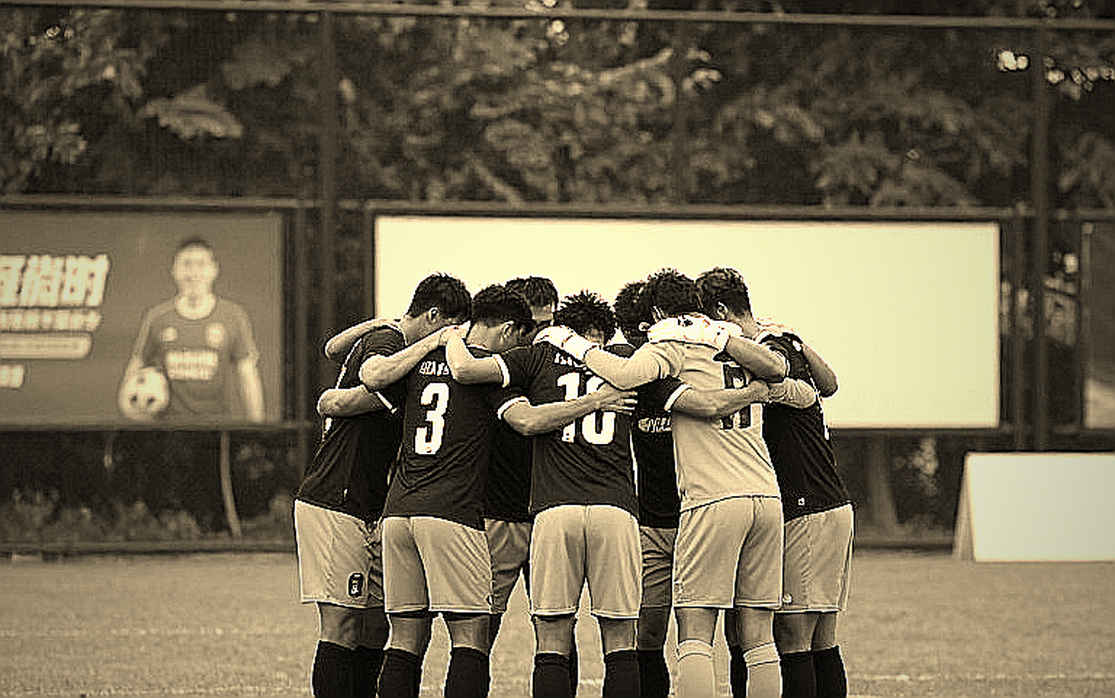
The floodlights are not fully on yet because the sun has not quite gone. In stand B, a white plastic chair sits out of line, empty. Someone marked it in the morning. Doan Van Hau is suspended after his challenge on Ngoc Tan; he will be at the ground, but not in a shirt. On the other touchline, another name is missing: Jovic Filip, sent off on Dong Nai's opening day. Two teams, two human-shaped gaps printed on the grass.
After more than three decades in stands and in front of screens, I have learned that many matches begin with empty chairs, not with the team sheet. The men who do not play still tell the story. They do not touch the ball, but they hold the whole world.
V.League 1, round three. Dong Nai have lost both opening matches, with no points. CAHN have won both, six points from six, sitting in the leading group. On paper this is a promoted side scrapping for a first point against a reigning champion whose squad includes internationals: Nguyen Quang Hai, Bui Hoang Viet Anh, Nguyen Dinh Bac, goalkeeper Nguyen Filip.
But the fixture list tells a different story. On September 16, CAHN played away at Gamba Osaka in the AFC Champions League Elite. Four days later they are in Dong Nai. At this level, four days is the distance between a fresh player and a player running on muscle memory. I once filmed a Korean club recovering from a nine-hour flight across Asia, and what stayed with me was not any drill but the sound of the dressing room on the third morning: almost silent. Nobody joked.
Dong Nai have no continental calendar. They have a home ground, a crowd, and something worth more than both: nothing left to lose. A promoted provincial side, after two straight defeats, walks into this match with what coaches call light shoulders. Light shoulders do not score goals, but they produce clarity. And at elite level, clarity is half of defending.
I watched Dong Nai's first two games on a screen in Incheon, two hours ahead of Vietnam, and what caught my eye was not the number of goals conceded but the way their back line came apart after the 60th minute. Based on my experience tracking matches in both the K League and the V.League, that is the signature of a side not yet used to the physical tempo of a division one level higher — not the signature of defenders who lack individual quality. Those are two different problems with two different cures.
CAHN arrive with an attack that can unlock a defence in three ways: central combinations through Quang Hai, wide breaks from Dinh Bac, and set pieces. When a team chooses a low block — sitting deep, holding distances between lines, refusing to press high — it takes away the first two by design. Space behind the defence disappears. Line-breaking passes become expensive. What remains, and always remains, is the dead ball.
I believe this match will be settled by a set piece or by a single individual moment, not by open exchange. Dong Nai cannot trade blows for 90 minutes. The match analysis I cross-checked concedes as much: the hosts can hardly choose to swap attacks over a long period. A promoted side, two defeats in, facing the champion, will defend first. That is not tactical cowardice. It is arithmetic.
And that arithmetic has just lost one attacking variable: Jovic Filip. Without him, Dong Nai have all but closed the door on scoring from open play. The problem becomes: keep the clean sheet as long as possible, then hunt one corner, one long throw, one mistake.
On the other side, Doan Van Hau is out through a fresh suspension. Geometrically, this is bad news for CAHN in a strictly tactical sense, because Van Hau does not merely defend the left. He is the man who starts moves, carries the ball forward, turns a defensive phase into a counter in two passes. Without him, CAHN lose part of their transition capacity, and their left channel becomes a zone worth targeting with short counters.
I have often seen a big side lose a first-choice full-back and still win — but win differently: more laboriously, taking thirty minutes longer than planned. Those games tend to finish 1-0 or 2-1 after the 80th minute, with a substitute as the hero.
At CAHN, the most interesting name for that role is Stefan Mauk. He is the kind of midfielder who appears exactly when the match needs one touch, not thirty passes. In the game CAHN won with ten men from the 69th minute and a decisive goal in stoppage time, Mauk represents the value pure statistics cannot measure: calmness at minute 90. Vietnamese football in recent years has produced many fast runners, but very few who stand still in the right place while the match is shaking.
What matters is how we read six points from six. Fans look at the table and see dominance. I look at it and see two matches decided by low-probability moments: a win with a man down, a goal in stoppage time. In modern football analysis, that result pattern is a two-sided signal. It speaks to character, and it also speaks to a side that has not built a safe margin before the game enters the danger zone.
I do not have xG or PPDA figures for either team this season — those numbers need to be verified against official data sources, and I refuse to build conclusions on sand. But the principle is clear: a perfect start built on late winners and man-down resilience tends to regress toward the mean as the sample grows. Football does not punish anyone immediately. It just waits for enough data.
There is one detail in the match data I want to dwell on, because it is the kind of detail bulletins skip: the head-to-head record across the last five meetings. If Dong Nai really are a first-season top-flight side, that history must include cup ties or lower-division meetings. This is a point to verify against official competition records. I raise it not to catch out a report, but because in documentary work I learned that a small error in the base data usually drags a large error into the conclusion.
In the same direction, labelling CAHN reigning champions while they are simultaneously playing Gamba Osaka in the AFC Champions League Elite is a detail that should be cross-checked against V.League and AFC season records. Season tags are often misassigned in short reports, and readers have a right to demand precision exactly there.
Back to the match. Mano Polking will have to rotate. The question is not whether, but where. Following the logic of a continental trip returned in four days, the first positions to suffer are usually the flanks and midfield, where the running volume is highest. Centre-backs can stay if fitness allows, because that position depends less on repeat speed. Strikers can stay too, because they run in bursts, not in continuous rhythms.
If Polking rotates correctly, CAHN still control the game and win through one moment. If he rotates too heavily and the match reaches the 70th minute level, Dong Nai's ground becomes a psychological trap. The hosts grow in belief. The stands sing louder. And what we call squad quality starts being tested by something that appears in no dataset.
This is where I want to question the dominant framing: the big club visits the small club. It is convenient, easy to write, and often true. But it lulls readers with an assumption that the quality gap is a constant. In football, the quality gap is a variable. It shrinks when the strong side must fly, recover, lose players, play on unfamiliar grass. It shrinks especially fast when the weaker side has nothing to lose and chooses a low-risk, patient approach, slicing the match into five-minute blocks.
That is the blind spot of collective memory. We remember the 90th-minute goal, but not the sixty minutes before it, or how many kilometres the stronger side carried in tired legs. We remember the scoreline and forget the time. And memory is always more crowded than reality. The stadium is empty, but memory is crowded.
For Dong Nai, I think the real pressure lies elsewhere, not in the result. A promoted side can lose its first three and still survive, if it keeps its defensive structure and the dressing room's belief. What kills a newcomer is not defeat but organisational collapse. A draw against the champions, therefore, is worth more than one point in morale terms — especially with Jovic Filip absent in attack, meaning the entire burden shifts backwards.
I once filmed a reserve goalkeeper in Kazan in 2026, a man who stood through the anthem for 90 minutes without playing, then wept when his team went out. Reserve goalkeepers — poets who never get published. Dong Nai on September 20 may stand in a similar place: on their own pitch, doing the hardest work, possibly receiving nothing but applause. But applause nobody hears is still applause.
My point is that the two teams' orders of priority are entirely different, and that matters more than any judgement about squad quality. CAHN need three points to hold their place at the top and to prove the continental trip has not knocked them out of rhythm. Dong Nai need a performance to hold their internal belief. One plays to maintain, one plays to survive. Matches like this rarely follow the script the media has already written.
I do not believe in a large margin of victory. I believe in a match compressed and tightening over time, opened by a set piece or an individual moment in the final twenty minutes. If it is level at 70 minutes, pressure shifts from Dong Nai's players to CAHN's bench. That is when the congested calendar speaks, and that is when four days in Osaka becomes the hosts' twelfth man.
Kick-off is 18:00 on September 20 at Dong Nai Stadium. After the final whistle, someone will open the league table, and someone will go looking for a white chair in stand B. I belong to the second group. Because after everything, what remains of a football match is not the score, but whatever we managed to record before the lights went out: a suspended player watching his teammates, a promoted side holding its defensive distances until the 88th minute, a cameraman capturing that moment without knowing what it means. Thirty years from now, when the V.League has passed through many more seasons, nobody will remember who won this game. But anyone who was there will remember the feeling of standing under the stand, hearing studs bite into grass, and understanding they were witnessing a very small part of a story far longer than ninety minutes.
I will watch from Incheon, and I will watch the first fifteen minutes closely. If Dong Nai sit deep and keep a flat back line, the game moves in their direction. If the line breaks before the 30th minute, the story returns to the script everyone predicted. Either way, I will stay to the end, because I have learned that football does not reward anyone who leaves their seat early. The best match of a season is usually the one nobody noticed, at a small ground, on an ordinary evening like September 20.

Cầu thủ liên quan
Bài nổi bật
Dong Nai City Club Heavily Fines Two Players for Foul Play Against Dinh Bac2026-09-22
U23 Vietnam vs Uzbekistan: Is 'Safe Possession' a Ticket or a Trap?2026-09-22
U23 Vietnam – Is a Draw with Uzbekistan Enough? The Problem Lies in the Attack2026-09-22
U23 Vietnam vs U23 Philippines at ASIAD 20: The Three-Point Equation and the Structure of Group C2026-09-18
CAHN's Trip to Japan: Measuring Limits in the Silence2026-09-16
Bài đề xuất
Mourinho Reunites with Inter Milan at Bernabeu: The Line Between Glorious Past and Harsh Present2026-09-08
Attractive Football Promise Before First Division Opener: The League Waits for No One2026-09-09
Beyond the Trophy: Kim Sang Sik's FIFA ASEAN Cup Mission2026-09-04
When Data Falls Silent: An Analysis of Emptiness and Intuition in Vietnamese Football2026-09-11
Vietnam U23 Lands in Nagoya: Six SLNA Players Make the Flight, Two Slots Still Hanging Before Kuwait2026-09-14
Before U23 Philippines, U23 Vietnam Must Solve the Long-Throw Problem2026-09-18
Bài đề xuất
U20 Vietnam and the miracle called 'wildcard': A narrow window between life and death2026-09-04
Vietnam U23 beat Philippines U23 2-0: 45 minutes to break a low block, and the Uzbekistan test ahead2026-09-19
The Moscow Legacy in the Heart of Vietnamese Football2026-09-09
Becamex TP.HCM Beat Thanh Hoa in the National Cup: When the Lower-Division Side Is Stronger Than the Top-Flight One2026-09-20
CAND FC: A Historic Promise and the 8-Day Puzzle Before the Season2026-09-04
VAR and Vietnamese Football: From the Judging Eye to Systemic Rebuilding2026-09-04
Bài đề xuất
U20 Vietnam and the miracle called 'wildcard': A narrow window between life and death2026-09-04
Vietnamese Football Through Nine Lenses of Analysis: The Data Gap and the Trap of Paper Conclusions2026-09-13
Beyond the Trophy: Kim Sang Sik's FIFA ASEAN Cup Mission2026-09-04
Before U23 Philippines, U23 Vietnam Must Solve the Long-Throw Problem2026-09-18
The Thirst for Beautiful Football Before the First Division Opener2026-09-09
V-League 2026-2027 after Round 2: Song Lam Nghe An causes a surprise, but the real focus lies at the bottom of the table2026-09-14